Panama Living Guide

Getting Around Panama

From a $0.25 MetroBus ride across Panama City to a 45-minute domestic flight to Bocas del Toro — Panama offers a full range of transportation options to fit every budget, lifestyle, and destination.

June 2026  |  12 min read  |  All of Panama

Panama is a small country with a remarkably diverse transportation network — one that continues to grow and modernize at a pace that surprises most newcomers. Panama City has Central America's only metro system. A scenic railway connects the Pacific and Atlantic coasts across the canal. Domestic airlines hop between major cities and remote island destinations in under an hour. Long-distance buses reach every corner of the country for just a few dollars. And for daily life, Uber and DiDi work seamlessly throughout the capital.

For expats moving to Panama, the big question is usually whether to own a car. The honest answer depends entirely on where you live — and this guide will help you think through all the options. Whether you are planning to live in Panama City, Boquete, Coronado, or somewhere more remote, understanding the transportation landscape is essential for budgeting and logistics.

Transportation Costs — Quick Reference

At-a-glance pricing for Panama's most common transportation options

$0.25MetroBus ride (Panama City)
$0.35Metro rail (Line 1)
$3–$8Uber across Panama City
$12–$20Uber from Tocumen airport
$12–$18Bus, Panama City to David
$89–$170Flight, Panama City to Bocas
$40–$50Canal Railway (City to Colón)
$15K–$30KUsed car purchase in Panama
Panama City Daily Life

Uber, DiDi & Ride-Share Apps

For daily life in Panama City, Uber is the transportation workhorse for most expats — and for good reason. It works seamlessly, drivers are plentiful, safety is far more predictable than traditional taxis, and prices are extremely reasonable. A typical crosstown ride in Panama City runs $3–$8. The trip from Tocumen International Airport into the city — which a yellow taxi would charge $30 for — typically runs $12–$20 via Uber depending on traffic and destination.

DiDi (the Chinese ride-share company) also operates in Panama City and is often slightly cheaper than Uber for comparable routes. Cabify is a third option targeting the slightly higher-end market. Most expats keep at least two ride-share apps on their phone and compare prices before requesting. All apps work with US and international credit cards.

Traditional yellow taxis are still widely available and cheaper for very short trips — but they do not use meters, so you must negotiate the fare before getting in. Fares for downtown trips run $2–$5, and a ride to Casco Viejo costs about $5–$7. Many expats stick with Uber/DiDi simply for the predictability and safety of knowing the price in advance.

Route Uber/DiDi Yellow Taxi
Short trip within neighborhood $2 – $4 $2 – $5
Cross-city (e.g., Marbella to Casco) $5 – $8 $5 – $10
Airport (Tocumen) to city $12 – $20 $25 – $35
City to Miraflores Locks $8 – $14 $12 – $20
🚗 Ride-Share Apps in Panama
Uber
Most popular, best app reliability, widest driver coverage
DiDi
Often slightly cheaper than Uber — worth having both apps
Cabify
Premium positioning, slightly higher end, consistent quality
Yellow Taxis
No meter — negotiate fare before entering. Useful for quick trips
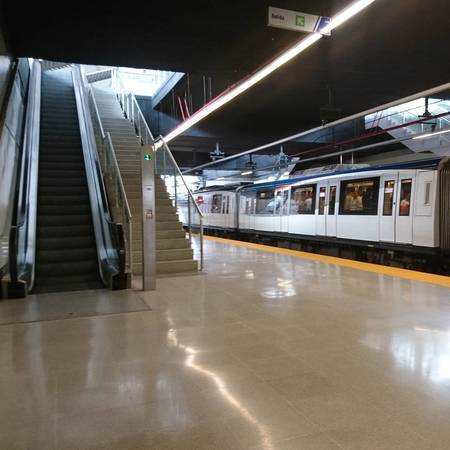
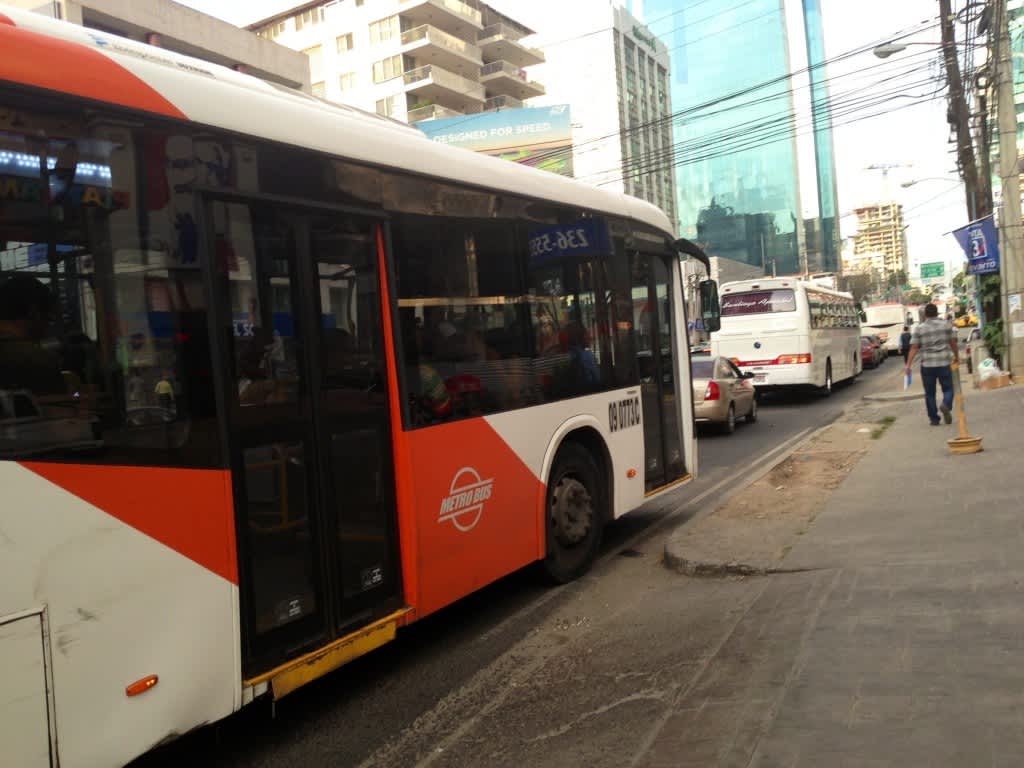
Panama Metro station train platformMetroBus Panama City street
Panama City Public Transit

The Metro — Central America's Only Subway

Panama City is home to the only metro rail system in all of Central America — a modern, air-conditioned, clean, and remarkably affordable way to move across the city. The Metro currently operates two lines with a third under development and planned expansions underway to extend coverage further into the metropolitan area.

🔴 Line 1 (Red)

Runs north–south through the city from Albrook (Bus Terminal) through the main commercial districts to San Isidro.

Fare: $0.35 per ride

🟢 Line 2 (Green)

Runs east–west connecting the city to San Miguelito and includes a spur line to Tocumen International Airport.

Fare: $0.50 per ride

🔵 Line 3 & Expansion (In Development)

Line 3 is planned to run from downtown Panama City west toward La Chorrera — extending the rail network significantly along the Pacific coast corridor. Extensions to existing lines are also in planning stages. Panama's rail infrastructure is actively growing, making it increasingly practical as a daily transit option.
MetroBus — City-Wide Bus Network

The MetroBus system is the backbone of public transit for Panama City residents — a fleet of modern, air-conditioned buses covering routes throughout the capital and its suburbs. Fares are extremely affordable: $0.25 per ride for local and city routes, and $1.25 for express Corredor commuter routes. The same Tarjeta Azul smart card used for the Metro works on all MetroBuses — tap and go.

Special discounted fares apply for students ($0.17), retirees ($0.24), and disabled passengers ($0.24) — making the MetroBus particularly economical for Pensionado visa holders. The bus network covers areas the Metro does not reach and connects to Metro stations at major transfer points throughout the city. For getting to markets, shopping centers, and neighborhoods not directly on the Metro lines, the MetroBus fills the gaps well.

$0.25Standard MetroBus fare
$0.24Pensionado / senior fare
$1.25Express Corredor routes

Long-Distance Buses — Across the Country

Panama has a well-developed intercity bus network that connects Panama City to virtually every major town in the country. The main departure point is the Gran Terminal de Transporte de Albrook — a massive, modern bus terminal in Panama City with dozens of companies and destinations. Buses are air-conditioned, reasonably comfortable, and extremely affordable by any standard.

The most popular routes for expats are to David (gateway to Boquete), Chitré (Azuero Peninsula), Santiago, and Colón. Services range from regular local buses making multiple stops to faster express coaches. For long routes like Panama City to David (6–7 hours), express services run overnight as well — you board at night, sleep, and arrive in the morning.

Route Duration Approx. Cost Frequency
Panama City → David 6–7 hours $12 – $18 Every 45 min
Panama City → Chitré 3.5–4 hours $8 – $10 Frequent
Panama City → Santiago 3–3.5 hours $7 – $9 Frequent
Panama City → Colón 1.5–2 hours $3 – $4 Very frequent
Panama City → Pedasí 4.5–5 hours $10 – $13 Several daily
David → Boquete 45 min – 1 hour $1.75 – $2.50 Every 30 min
Panama City → San José, Costa Rica ~16.5 hours ~$60 Daily

* All buses depart from Gran Terminal de Transporte de Albrook in Panama City. Tickets purchased at the terminal window. Cash and card accepted depending on operator.

Domestic Air Travel

Domestic Flights — Quick Hops Across the Country

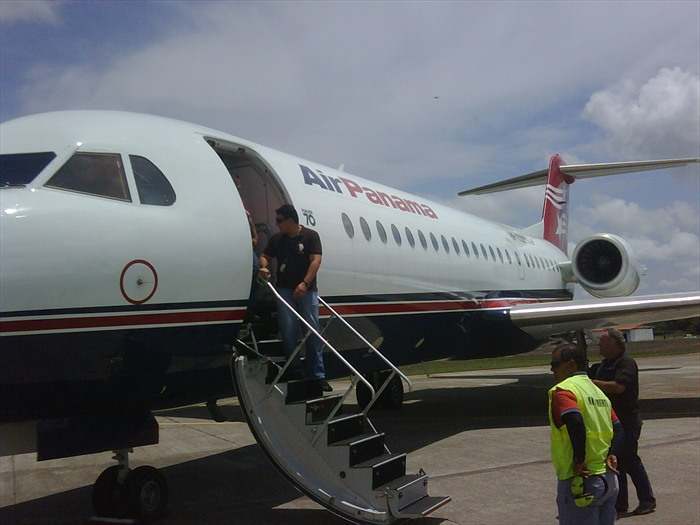
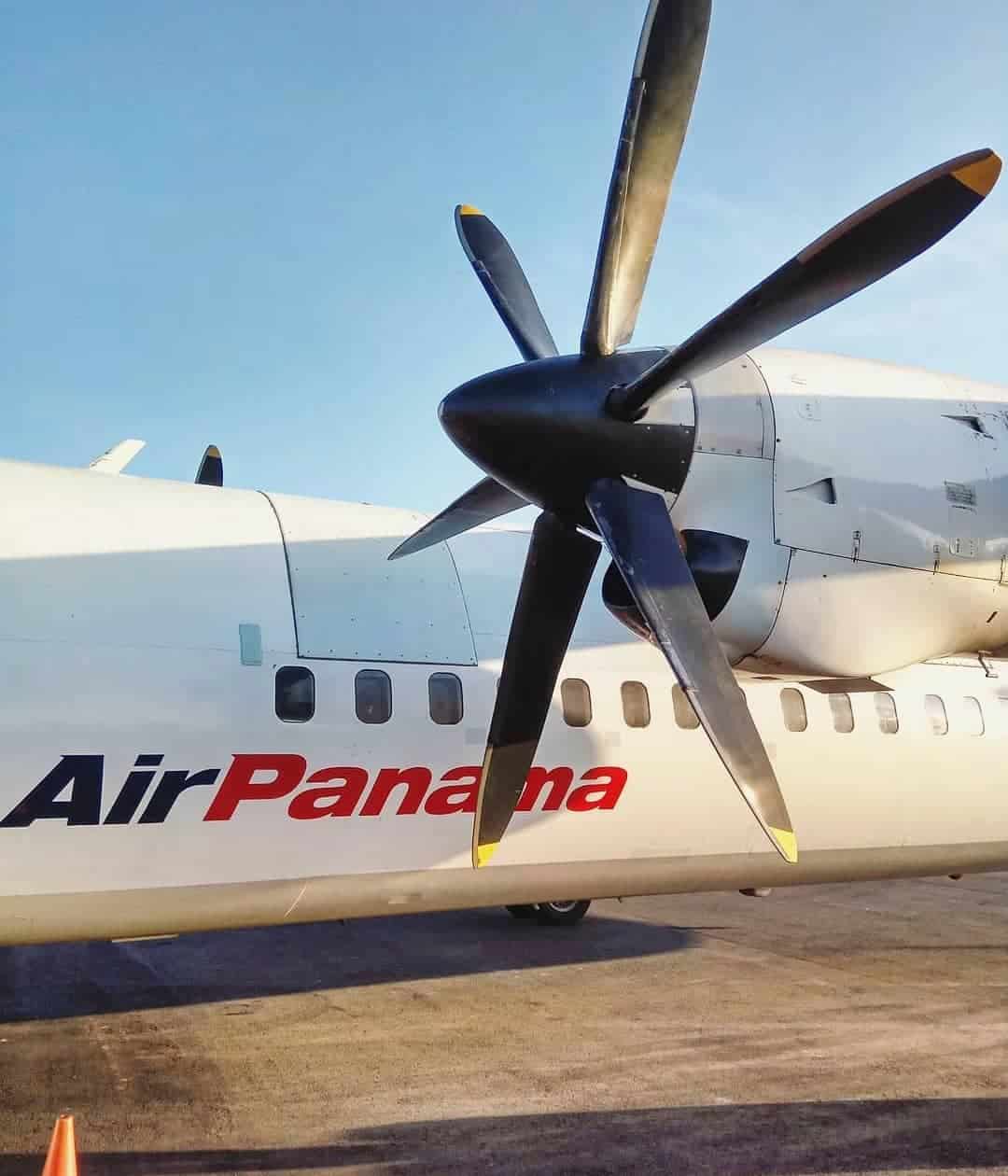
Panama's compact geography and the existence of domestic airports across the country make short-hop flights a genuinely practical and popular option — particularly for reaching destinations like Bocas del Toro, David, or the San Blas Islands where the alternative is a long drive or boat ride. Air Panama is the primary domestic carrier, operating small turboprop aircraft from Albrook (Marcos A. Gelabert) Airport — located conveniently inside Panama City — to more than a dozen destinations around the country.

Flights are short — most domestic routes are 35–60 minutes — and the experience is very different from commercial jet travel. You check in at a small terminal, walk across the tarmac, and board a 19-seat or smaller aircraft for a low-altitude scenic flight over rainforest, ocean, and mountains. Baggage limits are strict (typically 25 lbs) — pack light and plan accordingly.

Route Flight Time Approx. One-Way
Panama City → Bocas del Toro ~55 min $89 – $171
Panama City → David ~45 min $90 – $150
Panama City → San Blas (Guna Yala) ~30 min $65 – $120
Panama City → Contadora (Pearl Islands) ~20 min $60 – $100
David → Bocas del Toro ~30 min $86 – $140
Panama City → Chitré ~40 min $75 – $120

* Prices from Air Panama and vary by season, booking window, and availability. Book in advance for best fares. Always confirm baggage limits before flying.

Air Panama turboprop domestic flight tarmacAir Panama airplane close up propeller
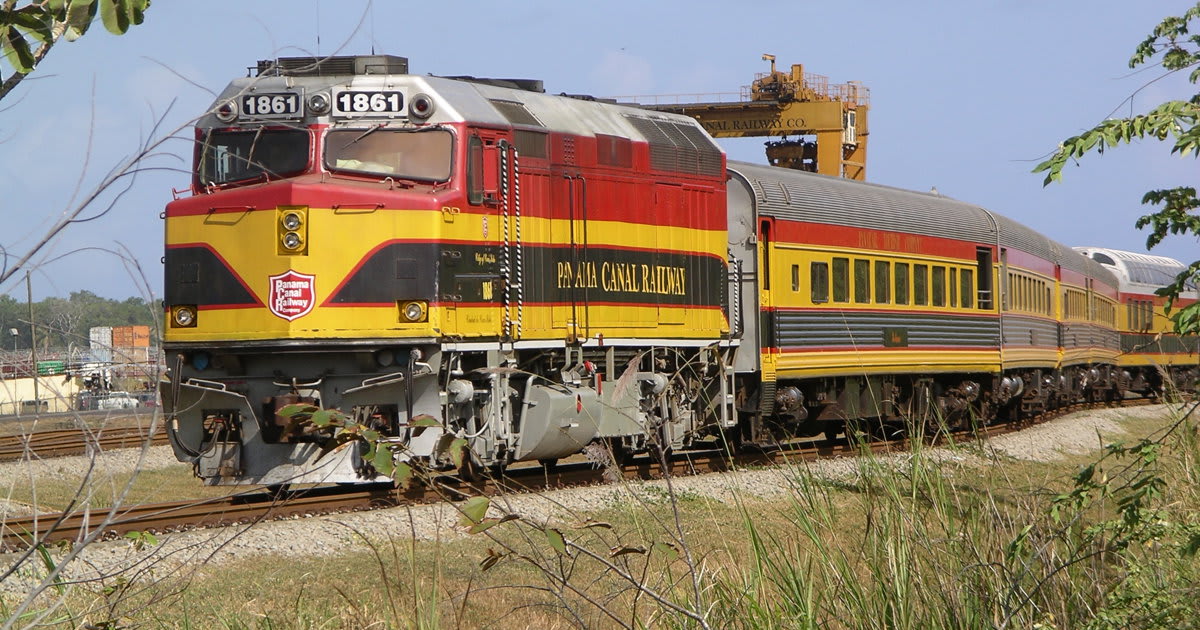
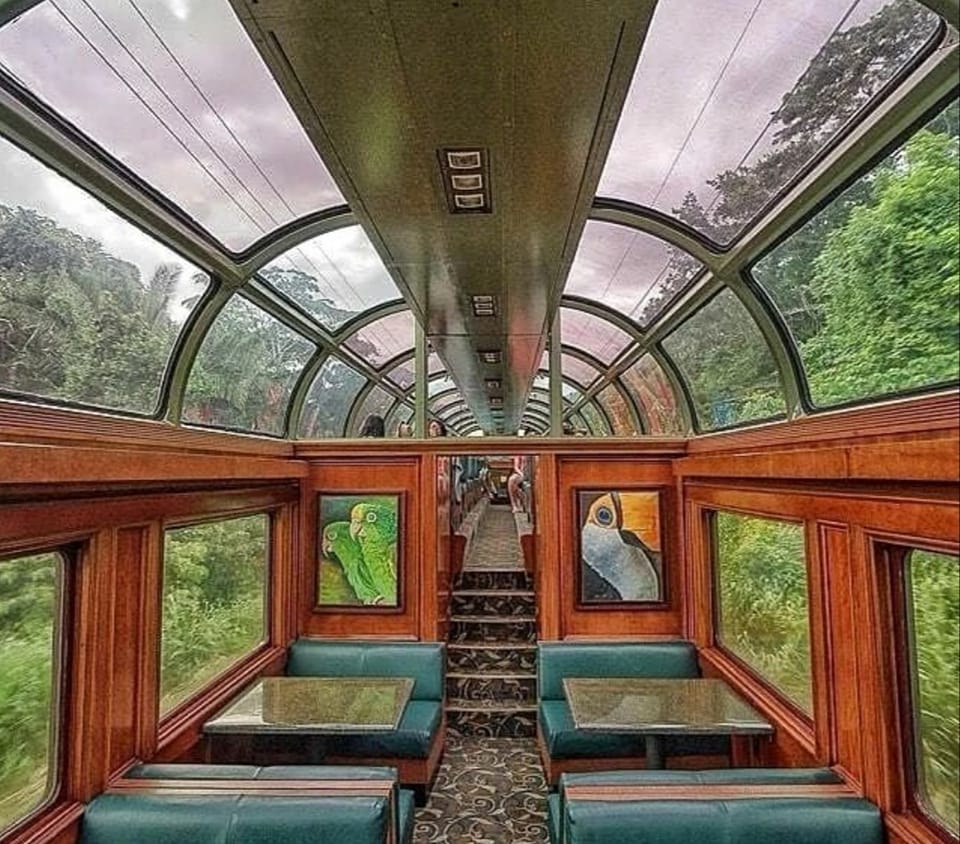
Panama Canal Railway tourist train exteriorPanama Canal Railway glass dome interior panoramic car
Scenic Rail

The Panama Canal Railway

The Panama Canal Railway is one of the most historic and scenic rail journeys in the Americas — and also one of Panama's best-kept transportation secrets. Running between Panama City on the Pacific coast and Colón on the Atlantic coast along the canal's edge, this train crosses the entire country in approximately one hour, hugging the banks of the canal and cutting through rainforest and artificial lakes the whole way.

The railway uses modern glass-domed observation cars and bi-level coaches, offering spectacular views of the canal, passing ships, rainforest wildlife, and the Gatún Lake. It departs Panama City in the morning and returns from Colón in the afternoon — making it easy to do as a day trip. Tickets range from $40–$50 depending on class of service. The train runs Monday through Friday on a regular schedule and has some weekend service.

Beyond its value as a transportation link, the Canal Railway is genuinely one of Panama's great experiences — and a far more enjoyable way to reach Colón than driving through the area's often congested and challenging road conditions. For expats, it also offers a window into Panama's geography that is simply not visible from a car.

~1 hrJourney time
$40–$50Ticket price
M–FRegular schedule
Car Ownership

Buying or Importing a Car in Panama

Whether you need a car in Panama depends almost entirely on where you live. Panama City residents can realistically get by on Uber, DiDi, the Metro, and buses without owning a vehicle — and given Panama City's notorious traffic, many expats actually prefer not driving. But if you live in Boquete, Coronado, El Valle, the Azuero, or any rural area, a car moves from convenient to essentially required for day-to-day life.

Buying a Car Locally

Panama has a solid used and new car market. Dealers in Panama City carry Japanese, Korean, American, and European brands. Used cars in good condition are widely available, and prices are reasonable — though higher than some might expect due to import taxes already built into the price of all vehicles in Panama.

Vehicle Type Typical Price Range (Panama market)
Economy car (used, reliable condition) $8,000 – $15,000
Mid-size sedan / SUV (used) $15,000 – $30,000
4WD SUV (used, good for highlands/rural) $18,000 – $40,000
New economy car $18,000 – $28,000
New mid-size SUV $28,000 – $50,000+
Importing a Car from the US

Many expats consider shipping their existing US vehicle to Panama. It is doable — but the cost math often makes buying locally more attractive. Panama's import duties are substantial: 15–25% of the vehicle's CIF value (Cost, Insurance, and Freight), plus 7% VAT, plus potentially a 5–10% luxury tax for higher-value vehicles. Add shipping costs starting around $2,000 from US ports, and total import costs can easily add 30–40% on top of a vehicle's market value.

🚗 Import Cost Example

A $20,000 vehicle shipped from Miami might incur: Shipping ~$2,000 + Import duty (20%) $4,000 + VAT (7%) $1,400 + Registration & broker fees ~$500 = approximately $27,900 total landed cost — versus buying a comparable used vehicle locally for $20,000–$25,000. Always run the numbers before deciding to import.

Driving in Panama — What to Know
  • Your US or foreign driver's license is valid in Panama for up to 90 days — after that you need a Panamanian license
  • Pensionado visa holders can often extend foreign license validity — confirm with ATTT (traffic authority)
  • Traffic in Panama City is heavy — Google Maps and Waze are widely used and very helpful
  • Roads in Panama City and major highways are generally good; rural roads vary significantly
  • A 4WD vehicle is strongly recommended for Boquete, Volcán, and highland areas — especially in rainy season
  • Auto insurance is mandatory and relatively affordable — $600–$1,200/year for a mid-range vehicle
  • Gas prices are significantly lower than the US and Canada — Panama subsidizes fuel prices

Car Rentals

Car rental is widely available in Panama and is the most practical option for visitors and new expats exploring the country before deciding where to settle. All major international brands operate at Tocumen International Airport (Budget, Hertz, Avis, Dollar, National, Europcar) as well as local companies offering better rates for longer rentals.

Vehicle Type Daily Rate (approx.) Weekly Rate (approx.)
Economy / compact car $25 – $45/day $140 – $250/week
Mid-size sedan or SUV $40 – $70/day $220 – $400/week
4WD SUV (for highlands / rural) $55 – $100/day $300 – $550/week

Rates vary by season and company. A credit card is required for the security hold. Confirm whether CDW (collision damage waiver) insurance is included or extra.

Water Transportation

Panama is a country of two coasts, numerous islands, and extensive river systems — which means water transportation is a practical and sometimes essential part of getting around in certain areas. The most notable water transport routes for expats and visitors are:

🛥️ Bocas del Toro Water Taxis

Bocas del Toro's archipelago is navigated almost entirely by water taxi — small motorized boats running between Bocas Town (Isla Colón), Bastimentos, Carenero, and other islands throughout the day. Fares are $1–$5 per person depending on the island. Fast, frequent, and part of everyday life in Bocas.

⛵ San Blas Boat Transfers

Getting between San Blas islands is by small boat operated by Guna community members. Transfers are typically included in your accommodation package. Independent travel between islands is negotiated directly with local boatmen.

🚢 Canal Transit Cruises

Partial and full Panama Canal transit tours depart from the Amador Causeway in Panama City. These passenger boat tours take you through the actual canal locks. Prices range from $100–$165 for partial transit to more for a full Pacific-to-Atlantic transit. A bucket-list experience.

🎣 Ferry & Charter Boats

The Pearl Islands (Contadora) and Coiba Island are accessible by charter boat or organized tour from Panama City. Travel times range from 1–3 hours by speedboat. Many dive operators and tour companies offer combined transport and activity packages.

Do You Need a Car? — Area by Area

The honest answer depends entirely on where you choose to live

Area Car Essential? Notes
Panama City Optional Metro + Uber + MetroBus cover most needs. Many expats go car-free. Traffic is terrible anyway.
Boquete Strongly Recommended Hilly terrain, properties spread out, need 4WD for rainy season. Local buses to David exist but limited.
Coronado / Pacific Coast Strongly Recommended Beach communities are spread out. Panama City access requires driving or taxis. 4WD not essential.
El Valle de Antón Recommended Some bus service to Panama City but infrequent. Car adds significant convenience and flexibility.
David Helpful City has good walkability in center. Car helpful for day trips to beach or highlands nearby.
Bocas del Toro Not Needed Island lifestyle — water taxis and walking are primary transport. Cars impractical on most islands.
Pedasí / Azuero Strongly Recommended Very rural. Limited public transport. A car is essential for day-to-day life and reaching Panama City.

Frequently Asked Questions

Common transportation questions from expats and visitors

Yes — Uber is widely considered the safest and most reliable way to get around Panama City. It operates throughout the metro area with good driver coverage, the app functions the same as in the US, and US/international credit cards work without issue. DiDi is also reliable and worth having as a backup. The airport Uber pickup can be slightly complicated — follow the in-app instructions for the designated pickup area at Tocumen.
Your US driver's license is valid in Panama for the first 90 days. After that, you technically need a Panamanian license. Pensionado visa holders may have extended validity — confirm with the ATTT (transit authority). Obtaining a Panamanian driver's license requires a valid foreign license, a medical eye exam, and some paperwork. The process is manageable and most expat forums have up-to-date step-by-step guides.
For most people, buying locally is more cost-effective. Import duties (15–25%), VAT (7%), potential luxury tax (5–10%), plus shipping costs (~$2,000+) can add 30–40% to a vehicle's value. The emotional attachment to a specific vehicle needs to be weighed against that cost premium. If your vehicle is older, paid off, and you have a strong preference for it, shipping may still make sense — but run the full math first.
You have three options: (1) Drive — approximately 6 hours via the Pan-American Highway. (2) Take a direct bus from Albrook terminal to David (6–7 hours, ~$15), then a connecting bus from David to Boquete (45 min, ~$2). (3) Fly from Albrook Airport (Albrook Marcos Gelabert) to David on Air Panama (~45 min, $90–$150) then take the short bus to Boquete. For a one-time trip, flying is the time-efficient choice. For regular commutes, the bus is extremely affordable.
Yes — Line 3 is planned to extend westward from Panama City toward La Chorrera, which would significantly improve rail access for the Pacific coast corridor where many expats live. Additional extensions to Lines 1 and 2 are also in planning. Panama's rail infrastructure is actively developing, and the long-term vision includes a much more comprehensive network. Timelines for completion vary, but the direction of growth is clearly toward broader coverage.

Explore More Panama Living Guides

From real estate to healthcare to cost of living — everything you need to plan your move to Panama.